
The Anatomy of a Restaurant Door: What Makes a Kitchen Door Commercial-Grade?
Dec 5th 2025
The Anatomy of a Restaurant Door: What Makes a Kitchen Door Commercial-Grade?
When it comes to running a successful restaurant, every detail matters—including the doors that separate your kitchen from the dining area. Commercial-grade kitchen doors aren’t just about aesthetics; they’re engineered for durability, safety, and efficiency. Let’s break down the key components that make these doors stand out.
- Materials That Stand the Test of Time
Commercial kitchen doors are exposed to heavy traffic, moisture, heat, and frequent cleaning. That’s why the material choice is critical:
- Stainless Steel: Known for its strength and resistance to corrosion, stainless steel doors are ideal for kitchens where hygiene and durability are top priorities.
- ABS Plastic (ABS): Lightweight yet tough, ABS doors resist scratches, and dents. They are easy to clean. Making them perfect for kitchen environments.
- Solid Core Wood with Laminate: Offers a balance of aesthetics and strength, often used in areas where design matters as much as functionality.
- Aluminum: Lightweight and corrosion-resistant, aluminum doors are durable and easy to maintain, making them suitable for high-traffic areas.
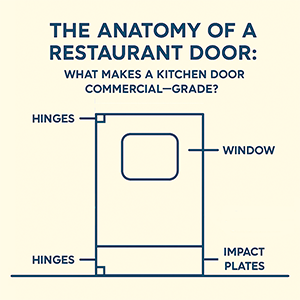
- Hinges Built for Heavy Use
Hinges are the unsung heroes of any door, and in a commercial kitchen, they need to handle constant swinging and impact:
- Double-Action Hinges: Allow doors to swing in both directions, ensuring smooth traffic flow for staff carrying trays or supplies.
- Spring-Loaded Hinges: Automatically return the door to a closed position, helping maintain temperature control and food safety.
- Heavy-Duty Ball Bearing Hinges: Reduce friction and wear, extending the life of the door even under heavy use.
- Design Features That Enhance Efficiency
Beyond materials and hardware, design plays a huge role in making a door truly commercial-grade:
- Kick Plates: Protect the lower portion of the door from scuffs and impacts caused by foot traffic or carts.
- Vision Panels: Small windows improve safety by allowing staff to see who’s on the other side before pushing through.
- Gasket Seals: Essential for temperature-sensitive areas, these seals help maintain climate control and reduce energy costs.
- Impact Resistance: Reinforced cores and edge guards prevent damage from frequent bumps and collisions.
Why It Matters
Investing in high-quality, commercial-grade kitchen doors isn’t just about compliance—it’s about creating a safer, more efficient workspace. The right door can reduce accidents, improve workflow, and even lower maintenance costs over time.
Ready to upgrade your restaurant doors? Explore our selection at RestaurantDoors.com and find the perfect fit for your kitchen.